Dambura: The Soul of Hazara Music
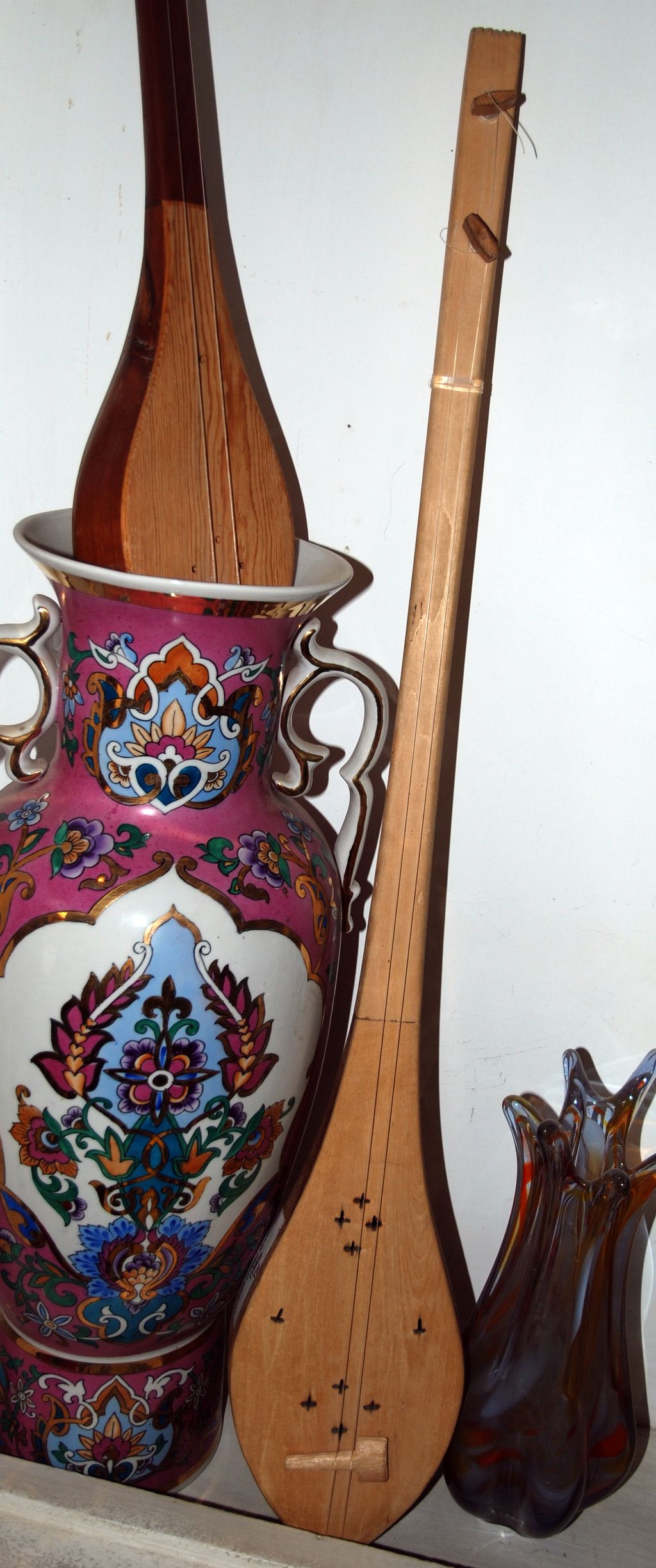
Pick up a dambura and you are holding something that has traveled centuries of history in its body. The instrument is modest by the standards of classical music - two strings, a long neck, a pear-shaped hollow carved from a single block of mulberry or apricot wood. It fits easily across the lap. There are no frets to guide the fingers. And yet from this stripped-down form, Hazara musicians have drawn music that carries grief and celebration, nationalist fire and pastoral calm, the sound of a people who have survived repeated attempts to erase them. The dambura is not just an instrument. For the Hazara people of central Afghanistan, it is the primary vehicle through which culture, memory, and identity have been passed across generations.
What the Dambura Is and How It Sounds
The dambura - also written "dambora" - is a fretless, long-necked lute with two strings, typically made of gut in older instruments and nylon in modern ones. The body and neck are most often carved from a single block of mulberry or apricot wood, giving the instrument a warm, slightly dry resonance. The strings run over a short bridge and are anchored to a pin at the base of the body. At the top of the neck, flat T-shaped pegs allow the player to tune the instrument by hand.
Playing technique varies by tradition but shares a common character: the player strums or plucks with vigor, often using the full hand rather than a pick, sometimes striking the body itself to add percussive emphasis. The upper string generally holds the drone - a continuous, vibrating foundation - while the lower string carries the melody. This separation of drone and melody is central to the music's sound. It gives dambura playing its characteristic texture: warm and sustained in the background, fluid and responsive up front. In faster passages, particularly dance songs, the strumming intensifies and the rhythmic slap of the hand against the wooden body becomes part of the beat.
A Central Asian Lineage
The dambura belongs to a family of long-necked, two-stringed lutes that stretch across Central Asia from Uzbekistan to Kazakhstan, each carrying a slightly different name and form. The Kazakh dombra, the Uzbek dutor, the Uyghur dutar, the Tajik dutor - these are all cousins, descended from a common ancestor traced back through the Silk Road to the Khorasanian tunbur, an ancient plucked lute whose name and form migrated with trade and migration across the region over centuries.
The word "dutar" itself comes from the Dari words do (two) and tar (string) - a name that simply describes what it is. The Hazara dambura is distinguished from the Uzbek or Uyghur dutar primarily by its fretlessness, its construction from a single block of wood rather than staves and the specific strumming and percussive techniques that Hazara players developed in the central highlands of Afghanistan, in the region known as Hazarajat. Where the Uzbek dutar is more suited to melodic ornamentation within court or classical music traditions, the Hazara dambura evolved in a folk context: storytelling, communal celebration, work songs, and eventually protest.
It is worth distinguishing the dambura from the Afghan rubab, the plucked lute more commonly associated with Pashtun and classical Afghan music. The rubab is a more complex instrument - multi-stringed, with sympathetic resonator strings that give it a rich, layered timbre suited to elaborate ornamentation. The dambura is leaner, more direct, and historically more democratic. You did not need years of court training to play it. It moved with the people.
Genres: From Folk Songs to Revolutionary Hymns
The core of traditional Hazara dambura music consists of folk genres that have been performed in Hazarajat for centuries. The doheti - two-line verses, often improvised, that have been passed down orally - are among the oldest forms. These short verses carry love poems, agricultural observations, laments, and humor. Singers and instrumentalists would build extended performances by stringing together doheti verses, with the dambura providing rhythmic and melodic grounding beneath the words. The oral tradition of doheti composition is still active; it is a form that rewards quick wit and poetic precision.
Alongside the doheti tradition sit longer narrative forms - songs that recount historical events, tell stories of migration and loss, or celebrate specific places and people. Lyrical themes across Hazara folk music range from the pastoral (harvest songs, descriptions of the landscape of Hazarajat) to the intensely personal (longing, exile, grief) to the communal (wedding songs, lullabies passed mother to child).
But the genre that transformed Hazara music's cultural and political reach is the surud-e-inqilabi - the revolutionary hymn. In the 1980s, as Afghanistan was convulsed by Soviet occupation and internal resistance movements, a new kind of song emerged among Hazara musicians. These ahangha-e inqilabi (revolutionary songs) were explicitly political: calls to consciousness, to resistance, to solidarity. They drew on the dambura's established role as a community instrument and turned it toward a sharper purpose. The form was vernacular and accessible - sung in Hazaragi, the Dari dialect of the Hazara people - and it circulated on cassette tapes throughout Hazarajat and among Hazara communities abroad in Pakistan and Iran. People who had never attended a concert knew these songs by heart.
The Men Who Made the Music
The figure most credited with founding the surud-e-inqilabi tradition is Sarwar Sarkhosh. Born in 1942 in what is now Daykundi Province, Sarkhosh was by training a dambura player and folk singer in the established Hazara tradition. What he did in the early 1980s was take that form and load it with direct political content. His songs called on Hazara youth to resist oppression and occupation - not only the Soviet presence in Afghanistan but the longer history of persecution and marginalization that the Hazara people had endured. His message was one of awakening: that the suffering was not inevitable, that a generation had the capacity to change it.
Sarwar Sarkhosh was killed in 1983, shot in the Uruzgan region by a local political faction. He was 41 years old. His death transformed him into a symbol that his music continues to carry. Listen to the recordings that survive - Dawood and Sarwar Sarkhosh: Mix Inqilabi Songs on YouTube - and you can hear why the music landed as it did. There is urgency in it without bombast, feeling without sentimentality.
His younger brother Dawood Sarkhosh, born in 1971, grew up watching and then learning from him. By seventeen, Dawood had learned dambura from Sarwar. When his brother was killed and his family eventually fled to Peshawar and then Quetta, Pakistan, Dawood carried the music with him into exile. In Quetta he studied harmonium under the Pakistani composer Arbab Ali Khan, adding technical depth to what he had inherited. He did not perform for commercial reasons. He performed, as he described it, out of nostalgia and to give voice to what Hazara refugees were living through - the dislocation, the grief, the will to survive. Hazara communities abroad attended his concerts in the thousands. His song "Ay Jawanana Hazara" - available on YouTube - became an anthem recognized across the Hazara world. You can also find a full live performance at SoundCloud.
Where the Sarkhosh brothers represent the political and nationalist tradition, Safdar Tawakoli stands as the great custodian of the older folk forms. Born in 1942 in Yakawlang, Bamyan Province - the heartland of Hazara culture - Tawakoli dedicated his life to mastering and preserving the traditional dambura repertoire. Over five decades of performance, he became the most important living repository of Hazaragi folk music. In 2017, when the first dambura music festival was held in Bamyan - an event that drew thousands of participants across two days - the festival honored Tawakoli's fifty years as a performer. The event itself was remarkable: local religious authorities tried to block it, calling it un-Islamic. Social media protests spread rapidly, and the people of Bamyan chose to hold the festival regardless. A dambura concert, in Bamyan, became an act of communal assertion. YouTube: Yakawlang, Bamyan, the birthplace of Hazaragi music, with Safdar Tawakoli.
The Dambura as Instrument of Resistance
The political dimension of dambura music did not begin with the surud-e-inqilabi. Hazara music has historically been described - including by Hazara musicians themselves - as a medium for expressing "sufferings, protests, and resistance" to oppression. The dambura was always a vehicle for more than entertainment. But the 1980s formalized this role and gave it a new intensity.
The cassette tape made this possible at scale. Before digital distribution, cassettes carrying the voices of Sarwar and then Dawood Sarkhosh circulated through Hazarajat and through Hazara communities in Quetta and Peshawar. Music crossed borders at the speed of a tape passed hand to hand. In refugee camps and urban apartments thousands of kilometers from Hazarajat, people heard their language, their instrument, and their situation named out loud. The effect was not only emotional. It was organizing. Songs that named oppression and called for awakening performed a political function even when no meetings were convened and no pamphlets were printed.
The oral-poetic tradition of the doheti also fed resistance. Two-line verses could be composed quickly, memorized easily, and passed without paper. In a community under pressure, this portability matters. The dambura's role as accompaniment to oral poetry - including political poetry - meant it was woven into the very fabric of how Hazara communities processed and transmitted their experience.
Under the Taliban's Silence
The Taliban's first period of rule, from 1996 to 2001, brought a near-total ban on music in Afghanistan. Instruments were confiscated and publicly destroyed - sometimes burned, sometimes "hanged" alongside cassette tapes as a theatrical display of prohibition. Musicians who had recorded or performed publicly faced real danger. Many fled: to Pakistan, to Iran, to wherever they could go. The 1990s Hazara musical tradition largely moved to Quetta and Peshawar, where it survived in exile communities and continued to be recorded and performed away from Taliban control. The dambura did not disappear, but it went underground or went abroad.
The Taliban's return to power in August 2021 renewed the suppression. Hundreds of musicians fled Afghanistan in the months that followed. Those who remained faced raids: documented cases include musicians whose homes were searched, their instruments smashed, and themselves jailed and beaten. For Hazara musicians specifically, the danger was compounded. The Taliban have historically regarded the Hazara people - Shia Muslims, with distinct cultural and linguistic traditions - as a particular target of hostility. As one Hazara musician noted to international press: "They despise me because I'm Hazara, a Shia minority known for our art, music, and dance - everything the Taliban considers haram." The dambura, so central to Hazara cultural identity, was doubly threatening in Taliban eyes.
Inside Afghanistan today, public dambura performance is effectively impossible.
The Dambura in New Countries
Outside Afghanistan, Hazara musicians in new countries are keeping the tradition alive with considerable energy. Australia has become one of the most significant centers of Hazara cultural life abroad, with a substantial community that has built institutions, organized cultural events, and maintained music practice across generations. Hazara Culture Day events in Australia and elsewhere regularly feature dambura performance as a centerpiece - not as museum piece but as living tradition.
Digital platforms have also created new modes of transmission. YouTube channels dedicated to Hazaragi music - including performances by younger artists playing in the dambura tradition - allow the music to reach second-generation Hazara youth who may have grown up in Australia, Germany, or Canada with limited exposure to the instrument in daily life. The music finds them through a screen instead of a gathering, but it finds them.
One of the most prominent Hazara musicians working internationally today is Elaha Soroor - born in Iran to Afghan refugee parents, she first gained wide recognition as a contestant on the Afghan Star TV competition in 2009. After leaving Afghanistan in 2010 following violent backlash for performing publicly as a woman, she settled in London and joined the ensemble Kefaya. In May 2024, she performed at Vienna's Odeon Theater for the Roots Revival concert series, an event documented on a live album released in July 2024. The album - Hazara Music, available at Roots Revival's Bandcamp and the full concert on YouTube - interprets Hazara musical traditions with both dambura and contemporary ensemble, demonstrating how the tradition is being carried forward by musicians who know its roots and are not afraid to move it. Soroor was named to the BBC's 100 Women list in 2024.
The Instrument and the Word
It is impossible to talk about dambura music without talking about poetry, because in the Hazara tradition they have never been fully separate things. The dambura is, at its most basic function, the accompaniment to the spoken and sung word. Doheti verses were not intended to be read silently on a page - they were meant to be sung to the drone of the strings, carried on breath and sound into a room or a gathering. Epic narratives, love poems, historical accounts, political calls to action: all of these used the dambura as their foundation.
This relationship between the instrument and oral literature means that the dambura has served as an archive. Because poetry and story in Hazara culture were traditionally passed through performance rather than manuscript, the instrument was present at every act of transmission. A singer who knew the old songs knew the old stories. The dambura player at a wedding or a gathering was not background music - they were a carrier of the community's accumulated memory.
This is part of what makes the Taliban ban on music so specifically damaging for Hazara culture. The ban is not only a prohibition on entertainment. It is a prohibition on a primary mode of cultural transmission. When the instrument is silenced, the archive it carries goes quiet with it.
That it has survived - through cassette tapes in Quetta, through cassette tapes in Peshawar, through YouTube channels in Melbourne and Berlin, through the hands of Safdar Tawakoli in Bamyan before the second Taliban period, through the voice of Elaha Soroor in Vienna - is a testament to what the people who love it have been willing to do to keep it alive. Two strings, a carved wooden body, and seventy-odd years of playing through everything that has been thrown at it. The dambura endures.
Related
ترجمه فارسی
دمبوره: روح موسیقی هزاره
دمبوره را که در دست بگیری، چیزی را در دست داری که قرنها تاریخ را در پیکرش حمل کرده است. این ساز در مقایسه با موسیقی کلاسیک سازی فروتن است - دو سیم، گردنی دراز، و کاسهای گلابیشکل که از یک قطعه چوب توت یا زردآلو تراشیده میشود. بهراحتی روی زانو جا میشود. هیچ پردهای ندارد که انگشتان را راهنمایی کند. و با این حال، از همین قالب ساده، نوازندگان هزاره موسیقیای را بیرون کشیدهاند که اندوه و جشن، شور ملی و آرامش روستایی را با خود میبرد - صدای مردمی که از تلاشهای مکرر برای محو شدنشان جان به در بردهاند. دمبوره تنها یک ساز نیست. برای مردم هزاره در مرکز افغانستان، دمبوره وسیله اصلی انتقال فرهنگ، حافظه و هویت از نسلی به نسل دیگر بوده است.
دمبوره چیست و چه صدایی دارد
دمبوره - که گاه «دمبورا» نیز نوشته میشود - سازی بیپرده با گردن دراز و دو سیم است که در سازهای قدیمیتر معمولاً از روده و در سازهای جدید از نایلون ساخته میشود. کاسه و گردن آن بیشتر اوقات از یک قطعه چوب توت یا زردآلو تراشیده میشود و به این دلیل ساز رزونانسی گرم و اندکی خشک دارد. سیمها از روی خرک کوتاهی میگذرند و به میخی در پایین کاسه بسته میشوند. در بالای گردن، گوشیهای تخت و T-شکل به نوازنده اجازه میدهند ساز را با دست کوک کند.
شیوه نواختن از سنتی به سنتی فرق میکند، اما خصلت مشترکی دارد: نوازنده با شور و قدرت ضربه میزند یا مینوازد، اغلب با تمام دست بهجای مضراب، و گاهی برای تأکید ضربی، با کف دست به بدنه ساز میکوبد. سیم بالایی معمولاً پایه واخوان را نگه میدارد - یک ارتعاش پیوسته و کشیده - در حالی که سیم پایینی ملودی را حمل میکند. این جدایی واخوان و ملودی در دل صدای این موسیقی نشسته است. به نوازندگی دمبوره بافت ویژهاش را میدهد: گرم و کشیده در پسزمینه، روان و پاسخگو در پیشزمینه. در گذرگاههای تندتر، بهویژه در آهنگهای رقص، شدت نوازش بیشتر میشود و ضربه ضربی دست بر چوب کاسه به بخشی از ضرب تبدیل میشود.
یک تبار آسیای میانه
دمبوره به خانوادهای از سازهای دوتارِ بلندگردن تعلق دارد که از ازبکستان تا قزاقستان در سراسر آسیای میانه پراکندهاند و هر یک نام و شکل اندکی متفاوت دارند. دومبرای قزاقی، دوتار ازبکی، دوتار اویغوری، دوتار تاجیکی - همه اینها پسرعمو هستند، که از یک نیای مشترک، یعنی تنبور خراسانی، یک سازِ مضرابی باستانی، آمدهاند که نام و شکلش طی قرنها همراه تجارت و مهاجرت از مسیر جاده ابریشم در سراسر منطقه جابهجا شده است.
خود واژه «دوتار» از واژگان دری «دو» و «تار» میآید - نامی که بهسادگی توصیف خود ساز است. دمبوره هزاره از دوتار ازبکی یا اویغوری بیش از همه از این جهت متمایز میشود که پرده ندارد، از یک قطعه چوب یکپارچه و نه از تختههای جداگانه ساخته میشود، و شیوههای خاص نواختن و ضربیای که نوازندگان هزاره در ارتفاعات مرکزی افغانستان، در منطقهای که به نام هزارجات شناخته میشود، پروراندند. در حالی که دوتار ازبکی بیشتر برای آرایههای ملودیک در سنتهای موسیقی درباری یا کلاسیک مناسب است، دمبوره هزاره در بستری مردمی پرورش یافت: قصهگویی، جشنهای همگانی، آوازهای کار، و در نهایت اعتراض.
ارزش دارد دمبوره را از رباب افغانی متمایز کنیم، یعنی سازِ مضرابیای که بیشتر با موسیقی پشتو و کلاسیک افغانی پیوند دارد. رباب سازی پیچیدهتر است - چندسیمه، با سیمهای واخوانِ همنوا که به آن طنینی پرلایه و غنی میبخشند و آن را برای آرایههای پیچیده مناسب میسازند. دمبوره سادهتر و مستقیمتر است و از نظر تاریخی مردمیتر. برای نواختن آن به سالها تربیت درباری نیاز نبود. این ساز با مردم میرفت.
گونهها: از آوازهای محلی تا سرودهای انقلابی
هسته موسیقی سنتی دمبوره هزاره از گونههای محلی تشکیل شده که برای قرنها در هزارجات اجرا میشده است. دوبیتیها - بیتهای دوسطره که اغلب بداهه ساخته میشوند و بهصورت شفاهی منتقل شدهاند - از کهنترین قالبها هستند. این بیتهای کوتاه شعر عاشقانه، مشاهدات کشاورزی، نوحهها و طنز را با خود حمل میکنند. خوانندهها و نوازندهها با کنار هم چیدن دوبیتیها اجراهای طولانی میساختند، در حالی که دمبوره پایه ضربی و ملودیک را زیر کلام فراهم میکرد. سنت شفاهی ساخت دوبیتی هنوز زنده است؛ این قالبی است که حاضرجوابی و دقت شاعرانه را پاداش میدهد.
در کنار سنت دوبیتی، قالبهای روایی بلندتری نشستهاند - آوازهایی که رویدادهای تاریخی را بازمیگویند، داستانهای مهاجرت و فقدان را روایت میکنند، یا مکانها و افراد خاصی را میستایند. مضامین شعری در موسیقی محلی هزاره از روستایی (آوازهای برداشت، توصیف چشمانداز هزارجات) تا شدیداً شخصی (دلتنگی، تبعید، اندوه) تا همگانی (آوازهای عروسی، لالاییهایی که از مادر به فرزند میرسد) را در بر میگیرد.
اما گونهای که گستره فرهنگی و سیاسی موسیقی هزاره را دگرگون کرد، سرود انقلابی است. در دهه ۱۹۸۰، در هنگامی که افغانستان زیر تجاوز شوروی و جنبشهای مقاومت داخلی به لرزه افتاده بود، گونه تازهای از آواز در میان نوازندگان هزاره پدید آمد. این آهنگهای انقلابی آشکارا سیاسی بودند: فراخوانهایی برای آگاهی، برای مقاومت، برای همبستگی. آنها از نقش جاافتاده دمبوره بهعنوان ساز جامعه بهره گرفتند و آن را بهسوی هدفی تیزتر چرخاندند. این قالب بومی و در دسترس بود - به زبان هزارگی، یعنی گویش دری مردم هزاره، خوانده میشد - و روی نوارهای کاست در سراسر هزارجات و در میان جوامع هزاره در پاکستان و ایران دست به دست میچرخید. کسانی که هرگز به یک کنسرت نرفته بودند، این آهنگها را از حفظ میدانستند.
مردانی که این موسیقی را ساختند
چهرهای که بیش از همه بنیانگذار سنت سرود انقلابی دانسته میشود، سرور سرخوش است. سرور سرخوش که در ۱۹۴۲ در منطقهای زاده شد که اکنون ولایت دایکندی است، با تربیتی بهعنوان نوازنده دمبوره و خواننده محلی در سنت جاافتاده هزاره آغاز کرد. کاری که او در اوایل دهه ۱۹۸۰ کرد این بود که این قالب را برداشت و آن را با محتوای سیاسی مستقیم بار کرد. آهنگهای او جوانان هزاره را به مقاومت در برابر ستم و اشغال فرامیخواند - نهتنها در برابر حضور شوروی در افغانستان، بلکه در برابر تاریخ طولانیتر آزار و اذیت و به حاشیه راندنی که مردم هزاره تحمل کرده بودند. پیام او پیام بیداری بود: این که این رنج گریزناپذیر نبود، که یک نسل توانایی تغییر آن را داشت.
سرور سرخوش در ۱۹۸۳ به قتل رسید، در منطقه اروزگان توسط یک جناح سیاسی محلی هدف گلوله قرار گرفت. ۴۱ سال داشت. مرگ او او را به نمادی تبدیل کرد که موسیقیاش همچنان آن را حمل میکند. به ضبطهای بهجامانده گوش کنید - Dawood and Sarwar Sarkhosh: Mix Inqilabi Songs on YouTube - و خواهید شنید چرا این موسیقی آنگونه که نشست، نشست. در آن، تبوتابی هست بدون آهوفغان، حس هست بدون احساساتیگری.
برادر کوچکتر او، داوود سرخوش، که در ۱۹۷۱ به دنیا آمد، در کنار او بزرگ شد و سپس از او آموخت. تا هفدهسالگی، داوود دمبوره را از سرور آموخته بود. وقتی برادرش کشته شد و خانوادهاش سرانجام به پشاور و سپس به کویته در پاکستان گریختند، داوود موسیقی را با خود به تبعید برد. در کویته نزد آهنگساز پاکستانی ارباب علی خان هارمونیه آموخت و به آنچه به ارث برده بود، عمق فنی افزود. او برای دلایل تجاری اجرا نمیکرد. او، چنانکه خود توصیف میکرد، از سر دلتنگی و برای آن که به آن چه پناهندگان هزاره از سر میگذراندند صدایی بدهد، اجرا میکرد - بیجایی، اندوه، اراده زیستن. هزارههای مقیم خارج از کشور به هزاران به کنسرتهای او میرفتند. آهنگ او «ای جوانان هزاره» - در یوتیوب در دسترس - به سرودی تبدیل شد که در سراسر جهان هزاره شناخته میشد. اجرای کامل زنده او را نیز میتوانید در SoundCloud بیابید.
در حالی که برادران سرخوش سنت سیاسی و ملی را نمایندگی میکنند، صفدر توکلی بهعنوان نگاهبان بزرگ قالبهای محلی کهنتر ایستاده است. صفدر توکلی که در ۱۹۴۲ در یکاولنگ ولایت بامیان زاده شد - قلب فرهنگ هزاره - زندگی خود را وقف تسلط و حفظ گنجینه سنتی دمبوره کرد. در پنج دهه اجرا، او به مهمترین گنجینه زنده موسیقی محلی هزارگی تبدیل شد. در ۲۰۱۷، زمانی که نخستین جشنواره موسیقی دمبوره در بامیان برگزار شد - رویدادی که هزاران شرکتکننده را در دو روز جذب کرد - این جشنواره از پنجاه سال اجراگری توکلی تقدیر کرد. خود این رویداد قابل توجه بود: مقامات دینی محلی کوشیدند آن را مسدود کنند و آن را غیراسلامی نامیدند. اعتراضات در شبکههای اجتماعی بهسرعت گسترش یافت، و مردم بامیان تصمیم گرفتند جشنواره را بهرغم همه چیز برگزار کنند. یک کنسرت دمبوره، در بامیان، به یک عمل ابراز همگانی تبدیل شد. YouTube: Yakawlang, Bamyan, the birthplace of Hazaragi music, with Safdar Tawakoli.
دمبوره بهعنوان ساز مقاومت
بُعد سیاسی موسیقی دمبوره با سرود انقلابی آغاز نشد. موسیقی هزاره از نظر تاریخی - از جمله توسط خود نوازندگان هزاره - بهعنوان رسانهای برای بیان «رنجها، اعتراضها و مقاومت» در برابر ستم توصیف شده است. دمبوره همیشه ابزاری بود برای چیزی فراتر از سرگرمی. اما دهه ۱۹۸۰ این نقش را رسمی کرد و به آن شدت تازهای بخشید.
نوار کاست این را در مقیاس وسیع ممکن کرد. پیش از توزیع دیجیتال، کاستهایی که صدای سرور و سپس داوود سرخوش را با خود میبردند، در سراسر هزارجات و در میان جوامع هزاره در کویته و پشاور میچرخیدند. موسیقی با سرعت یک نوار که دست به دست میشد، از مرزها گذشت. در اردوگاههای پناهندگان و آپارتمانهای شهری هزاران کیلومتر دور از هزارجات، مردم میشنیدند که زبانشان، سازشان و وضعیتشان بهصدای بلند نام برده میشود. اثر تنها عاطفی نبود. سازماندهنده بود. آهنگهایی که از ستم نام میبردند و خواستار بیداری میشدند، کارکردی سیاسی انجام میدادند حتی زمانی که هیچ جلسهای برگزار نمیشد و هیچ رسالهای چاپ نمیگرفت.
سنت شعری-شفاهی دوبیتی نیز به مقاومت غذا میرساند. بیتهای دوسطره را میشد بهسرعت ساخت، بهراحتی به حفظ سپرد، و بدون کاغذ منتقل کرد. در جامعهای زیر فشار، این قابلیت حملونقل مهم است. نقش دمبوره بهعنوان همراهی برای شعر شفاهی - از جمله شعر سیاسی - یعنی این که این ساز در بافت خود این که چگونه جوامع هزاره تجربه خود را پردازش و منتقل میکردند، تنیده شده بود.
زیر سکوت طالبان
نخستین دوره حکومت طالبان، از ۱۹۹۶ تا ۲۰۰۱، یک ممنوعیت تقریباً کامل موسیقی را در افغانستان به همراه آورد. سازها مصادره و بهطور علنی نابود میشدند - گاه سوزانده میشدند، گاه در کنار نوارهای کاست «به دار آویخته» میشدند تا نمایش تئاتری ممنوعیت برپا شود. نوازندگانی که علناً ضبط یا اجرا کرده بودند، با خطر واقعی روبهرو بودند. بسیاری گریختند: به پاکستان، به ایران، به هر جایی که میتوانستند بروند. سنت موسیقی هزاره در دهه ۱۹۹۰ تا حد زیادی به کویته و پشاور منتقل شد، جایی که در جوامع مهاجر زنده ماند و دور از کنترل طالبان به ضبط و اجرا ادامه داد. دمبوره ناپدید نشد، اما به زیرزمین رفت یا به خارج رفت.
بازگشت طالبان به قدرت در اگست ۲۰۲۱ این سرکوب را تجدید کرد. صدها نوازنده در ماههای پس از آن از افغانستان گریختند. آنانی که ماندند با هجومها روبهرو شدند: موارد مستند شامل نوازندگانی است که خانههای شان جستجو، سازهای شان شکسته، و خودشان زندانی و کتک خوردند. برای نوازندگان هزاره بهطور خاص، خطر دوچندان بود. طالبان از نظر تاریخی مردم هزاره را - مسلمانان شیعه با سنتهای فرهنگی و زبانی متمایز - هدف ویژه خصومت خود قرار دادهاند. چنانکه یک نوازنده هزاره به مطبوعات بینالمللی گفت: «آنها از من بیزارند چون هزاره هستم، یک اقلیت شیعه که به هنر، موسیقی و رقص شناخته میشویم - همه چیزهایی که طالبان حرام میشمارند.» («They despise me because I'm Hazara, a Shia minority known for our art, music, and dance - everything the Taliban considers haram.») دمبوره که چنین در دل هویت فرهنگی هزاره نشسته است، در چشم طالبان دوبرابر تهدیدآمیز بود.
درون افغانستان امروز، اجرای علنی دمبوره عملاً ناممکن است.
دمبوره در کشورهای تازه
بیرون از افغانستان، نوازندگان هزاره در کشورهای تازه با انرژی قابل توجهی این سنت را زنده نگه میدارند. آسترالیا به یکی از مهمترین مراکز زندگی فرهنگی هزاره در خارج تبدیل شده، با جامعهای بزرگ که نهادها ساخته، رویدادهای فرهنگی برگزار کرده، و تمرین موسیقی را در طول نسلها حفظ کرده است. رویدادهای «روز فرهنگ هزاره» در آسترالیا و دیگر کشورها بهطور منظم اجرای دمبوره را در کانون خود قرار میدهند - نه بهعنوان شیء موزهای بلکه بهعنوان سنتی زنده.
پلتفرمهای دیجیتال نیز شیوههای تازهای از انتقال ایجاد کردهاند. کانالهای یوتیوب که به موسیقی هزارگی اختصاص دارند - از جمله اجراهای هنرمندان جوانتر که در سنت دمبوره مینوازند - به این موسیقی اجازه میدهد به جوانان هزاره نسل دوم برسد که شاید در آسترالیا، آلمان، کانادا یا ایالات متحده با تماس محدود با این ساز در زندگی روزمره بزرگ شدهاند. موسیقی بهجای یک گردهمایی، از طریق یک صفحه آنها را پیدا میکند، اما پیدا میکند.
یکی از برجستهترین نوازندگان هزاره که امروز در سطح بینالمللی فعالیت میکند الهه سرور است - متولد ایران از والدین پناهنده افغان، که نخست بهعنوان شرکتکننده در رقابت تلویزیونی «ستاره افغان» در ۲۰۰۹ شناخته شد. پس از ترک افغانستان در ۲۰۱۰ به دنبال واکنش خشن نسبت به اجرای علنی او بهعنوان زن، در لندن سکونت گزید و به گروه «کفایا» پیوست. در می ۲۰۲۴، در تئاتر اودون وین برای مجموعه کنسرت «Roots Revival» اجرا کرد، رویدادی که در یک آلبوم زنده که در جولای ۲۰۲۴ منتشر شد مستند گردید. این آلبوم - Hazara Music, available at Roots Revival's Bandcamp و full concert on YouTube - سنتهای موسیقی هزاره را با دمبوره و گروه معاصر تفسیر میکند، و نشان میدهد چگونه این سنت توسط نوازندگانی پیش برده میشود که ریشههای آن را میشناسند و از تکان دادن آن هراسی ندارند. سرور در ۲۰۲۴ به فهرست «۱۰۰ زن» بیبیسی راه یافت.
ساز و کلام
ناممکن است درباره موسیقی دمبوره سخن گفت بدون آن که از شعر سخن گفت، چرا که در سنت هزاره این دو هرگز به طور کامل از هم جدا نبودهاند. دمبوره، در ابتداییترین کارکرد خود، همراه کلمه گفتهشده و خواندهشده است. دوبیتیها برای آن نبودند که در سکوت روی صفحه خوانده شوند - بنا بود بههمراه واخوان سیمها خوانده شوند، بر دم و صدا به اتاق یا گردهمایی برده شوند. روایتهای حماسی، شعرهای عاشقانه، گزارشهای تاریخی، فراخوانهای سیاسی به عمل: همه اینها دمبوره را پایه خود قرار میدادند.
این رابطه میان ساز و ادبیات شفاهی به این معنا است که دمبوره بهعنوان یک آرشیو خدمت کرده است. چون شعر و داستان در فرهنگ هزاره بهطور سنتی از طریق اجرا و نه دستنویس منتقل میشد، این ساز در هر عمل انتقال حضور داشت. خوانندهای که آهنگهای قدیمی را میدانست، داستانهای قدیمی را میدانست. نوازنده دمبوره در یک عروسی یا گردهمایی، موسیقی پسزمینه نبود - حامل حافظه انباشته جامعه بود.
این بخشی از آن چیزی است که ممنوعیت طالبان بر موسیقی را برای فرهنگ هزاره بهطور خاص آسیبزننده میکند. این ممنوعیت تنها منع سرگرمی نیست. منع یک شیوه اصلی انتقال فرهنگی است. وقتی این ساز خاموش میشود، آرشیوی که با خود حمل میکند نیز خاموش میشود.
این که دمبوره زنده مانده است - از طریق نوارهای کاست در کویته، از طریق نوارهای کاست در پشاور، از طریق کانالهای یوتیوب در ملبورن و برلین، از طریق دستان صفدر توکلی در بامیان پیش از دوره دوم طالبان، از طریق صدای الهه سرور در وین - گواهی است بر آن چه دوستداران آن آماده بودهاند برای زنده نگه داشتنش انجام دهند. دو سیم، یک بدنه چوبی تراشیده، و هفتاد سال و اندی نواختن در میان هر آن چه که بر سر آن آمده است. دمبوره پایدار است.