The Buddhas of Bamiyan: What Was Lost and What Remains
Two thousand years of cultural history, destroyed in two days.
On March 2, 2001, the Taliban fired artillery at a sandstone cliff in central Afghanistan.
The cliff face was about 1,500 meters long and 50 meters high. Carved into it were two standing Buddha figures - the largest of their kind anywhere in the world. The taller figure stood 55 meters. The shorter, 38 meters. They had been there, in one form or another, for roughly fourteen centuries.
Artillery was not enough. After several days of sustained fire, both statues were damaged but not destroyed. So Taliban fighters were lowered on ropes down the face of the cliff. They drilled holes into the sandstone. Foreign technical assistance was reportedly involved in placing the explosives inside the figures. Anti-tank mines were positioned at the base of the niches so that falling rock fragments would trigger further detonations. When one of the faces survived the initial blasts, a rocket was fired to finish it.
The full demolition took approximately 25 days. By the end of March 2001, both statues had been reduced to rubble.
The world had watched all of it. UNESCO sent 36 letters. Muslim religious scholars from Egypt, Iraq, and Pakistan issued fatwas condemning the planned destruction. The UN General Assembly passed a resolution calling for the demolition to halt, sponsored by more than 90 countries. Japan proposed airlifting the statues out of Afghanistan and offered to pay for it. Pakistan - one of only three countries that formally recognized the Taliban government - made direct appeals. None of it made any difference.
What international coverage often missed then, and what the historical record must be clear about now: the Bamiyan Valley is the heart of Hazarajat, the Hazara homeland. The people who had lived in the shadow of those statues for generations had names for them that had nothing to do with Buddhism. And the destruction of the statues was not a discrete event - it was one act in a broader campaign of persecution and erasure directed at the Hazara people. Those two stories are the same story.
What They Were
The Bamiyan Valley had been a Buddhist religious site since at least the 2nd century CE, under the Kushan Empire - the dynasty that controlled the Silk Road between China, India, and Rome. The Kushans presided over a genuinely syncretic culture, one in which Hellenistic Greek aesthetics, Persian imperial traditions, Indian religious thought, and Central Asian forms all met and fused. That fusion is visible in everything the valley produced.
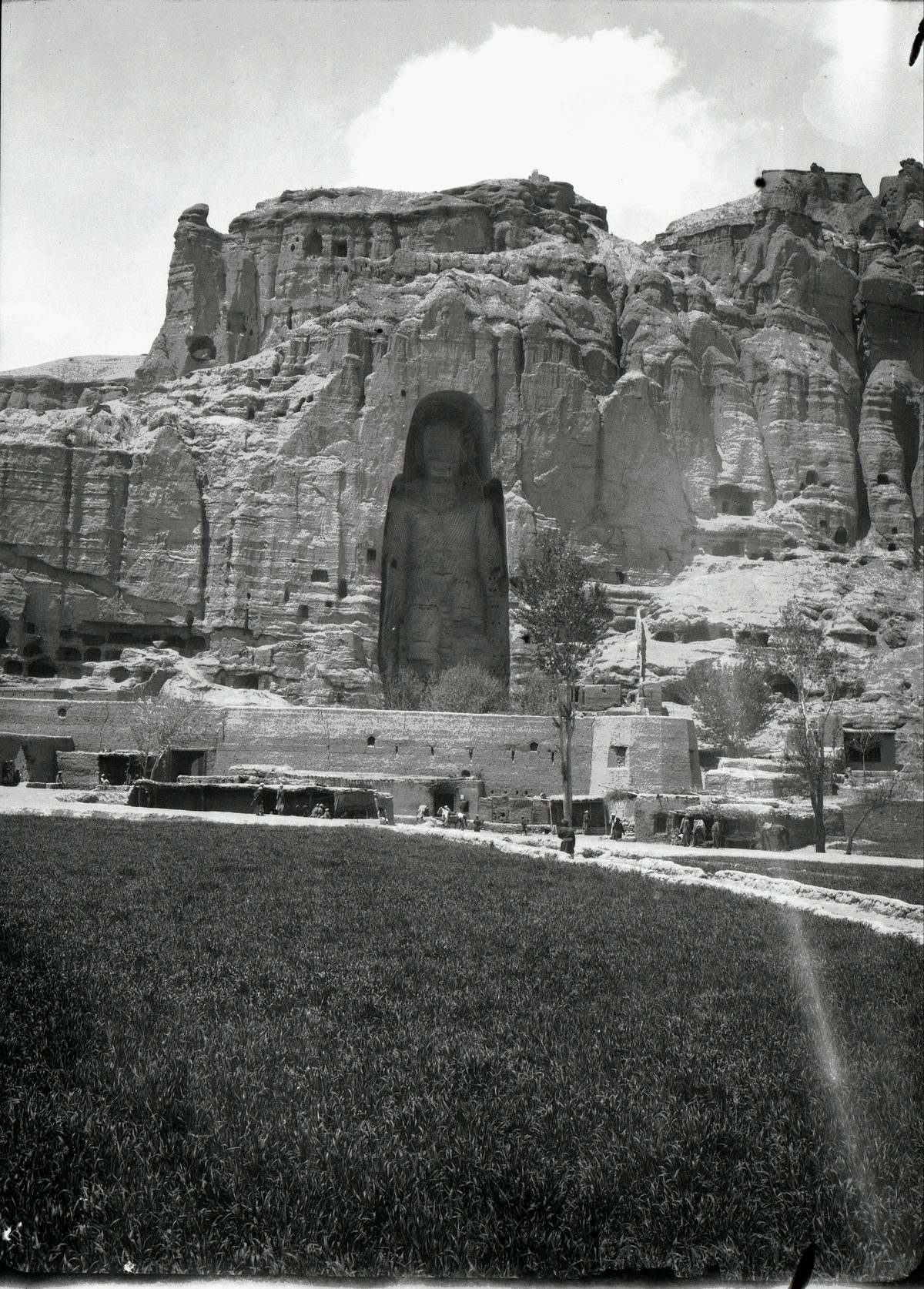
The two great Buddha statues were carved directly into the cliff face - the bodies formed from the sandstone itself, with faces and hands likely modeled in mud mixed with straw, coated in stucco, and painted. The style belongs to what scholars call the Gandharan tradition: Buddhist subject matter rendered with Hellenistic technique, the robes carved in deep, flowing relief that recalls Greek and Roman sculpture.
The eastern figure - 38 meters tall, carbon-dated to approximately 570 CE - was known in medieval Islamic sources as the "white idol." It had been painted white at some point in its history. The western figure - 55 meters tall, carbon-dated to approximately 618 CE - was the "red idol." Later research would confirm both statues had been painted multiple times across their long histories: earlier layers showed dark blue interior robes and bright orange or pink exteriors, before the red-and-white phase documented by 11th-century writers. The painting history is itself a record of centuries of maintenance, devotion, and use.
Chinese Buddhist pilgrim Xuanzang visited Bamiyan on April 30, 630 CE. He found it flourishing: "more than ten monasteries and more than a thousand monks." The valley was a major station on the Silk Road, visited by pilgrims, merchants, and scholars from across the known world. The statues were scaled to be visible from a distance, positioned to anchor a living religious community that included hundreds of cave chambers - monasteries, chapels, meditation cells, and sanctuaries - carved into the same cliff.
The site remained Buddhist until the Islamic conquests of approximately 770 CE. After that, the great figures stood in a Muslim landscape for more than twelve centuries before the Taliban came.
Their significance was not simply that they were large. They were the largest surviving examples of a specific tradition - the standing Buddha in the Gandharan style - and they stood at the intersection of at least half a dozen distinct civilizations. They documented, in stone and plaster, how cultures actually meet and transform each other. That kind of evidence cannot be reconstructed.
Salsal and Shahmama
The Hazara people did not build the Bamiyan Buddhas. The statues predated the emergence of the Hazara as a distinct ethnolinguistic group by many centuries. But over generations, the Hazara made them their own - in the way that communities always make ancient things their own, through the stories they tell about what they see every day.
In Hazara tradition, the two figures became Salsal and Shahmama: not Buddhist icons, but the protagonists of a local love story - a star-crossed couple whose doomed romance ended in tragedy, turning them to stone and fixing them forever into the cliff above the valley. This is not a misreading of history. It is how cultures work. Every community that lives long enough with a monument eventually makes it mean something personal.
Bamiyan Province sits at the center of Hazarajat - the mountainous region of central Afghanistan that has been the Hazara homeland for centuries. It functions, within the Hazara world, the way that certain geographies function for certain peoples: not just as a place, but as a proof of belonging. Hazaras comprise an estimated 9 to 20 percent of Afghanistan's national population - though exact figures remain disputed, as no reliable national census has ever been conducted. Within Hazarajat, they are the majority. Bamiyan is their center.
The Hazara are an ethnolinguistic group who speak Hazaragi, a dialect of Farsi, and practice Shia Islam. That combination - ethnic distinctness and Shia religious identity in a Sunni Pashtun-dominated country - has made them targets of persecution by ruling structures in Afghanistan for well over a century. They have been expelled from their lands, massacred in the north, economically excluded, and politically marginalized. The 1998 massacre in the north - in which Human Rights Watch documented at least 2,000 Hazara civilians killed, with broader estimates ranging substantially higher - happened just three years before the Buddhas were destroyed. Multiple human rights organizations characterized it as ethnic cleansing.
For Hazara people scattered across the world by war and expulsion - large communities now in Iran, Pakistan, Australia, Europe, and North America - Bamiyan and the figures of Salsal and Shahmama functioned the way certain landmarks function for displaced peoples everywhere: as a geographic symbol of home, a point of orientation, a proof that a community existed there and had a history. When you have been told, repeatedly and violently, that you do not belong, the monument that stands for your belonging carries weight that no outsider can fully calculate.
The cave structures in the cliff face also had a practical connection to Hazara life: local families used them for shelter through Afghanistan's brutal winters and through the periodic violence that swept the valley. The niches and passages were not museum pieces to the people who lived there. They were part of the landscape of daily survival.
What Else Was There
The Buddhas were the most visible element of a much larger complex - and the loss of the complex matters at least as much as the loss of the statues.
The cliff face contained approximately 50 painted caves, decorated with scenes from the life of the Buddha. There were hundreds of additional artificial caves throughout the valley - monasteries, chapels, meditation spaces. The archaeological remains spanned from the 3rd to the 8th century CE. The site as a whole was, in effect, a Silk Road city: a place where Buddhist civilization had concentrated and expressed itself over hundreds of years.
In 2008, a research team from Japan, France, and the United States published findings that reframed what the cave paintings represented. Analysis of paint samples from 12 of the caves revealed that the binding medium was oil - specifically walnut and poppy seed oils, ground together with mineral pigments. Oil-based painting. In the 6th and 7th centuries CE.
This predated the earliest previously known use of oil paint in Europe by five to seven centuries. The Bamiyan caves contained the oldest known oil paintings in the world.
The murals have been carbon dated to between 438 and 980 CE, with the main period of production between the 6th and 8th centuries. Their content reflects the same synthesis visible everywhere at Bamiyan: Indian Gupta aesthetics, Sasanian Persian forms, Byzantine stylistic elements, and the local Tokharistan tradition, all woven together in images of seated Buddha figures amid vermilion robes, palm leaves, and mythical creatures.
The Taliban's destruction, and the period of looting and neglect that followed, resulted in the loss of more than 80 percent of the cave paintings that had survived to modern times.
The Decree and the Demolition
On February 26, 2001, Taliban Supreme Leader Mullah Muhammad Omar issued a formal decree: all non-Islamic statues and sanctuaries in Afghanistan were to be destroyed, "so no one can worship or respect them in the future." The decree followed consultation with a council of religious scholars convened under Taliban authority.
This was, notably, a reversal. In July 1999, Omar had issued a decree protecting the Bamiyan statues and described plans for a tourism circuit. What changed between 1999 and 2001 is a matter of contested historical analysis, but the timing is worth noting. The decree came during a period of intensifying Taliban violence against Hazaras and deepening international isolation following documented Taliban atrocities. The destruction of a monument the Hazara people called by name - Salsal, Shahmama - was not happening in a separate political universe from the massacres and expulsions unfolding in the same province.
On March 1, the Taliban publicly announced that all statues depicting humans in Afghanistan would be destroyed. Work began the following morning.
The process required engineering effort that the Taliban did not initially expect. Artillery fire caused heavy damage but did not bring down the figures. Anti-tank mines were placed at the base of the niches. Taliban fighters were lowered on ropes to drill holes in the statues themselves. Explosives were placed inside. When one face survived the blasts, a rocket was fired to complete the job.
Mullah Omar, quoted on March 6, was direct: "Muslims should be proud of smashing idols. It has given praise to Allah that we have destroyed them."
The international response was genuine in its condemnation and completely without consequence. The episode revealed a fundamental gap in international cultural heritage law: there was no enforcement mechanism to stop deliberate, publicized cultural destruction within a sovereign state - not even when 90 countries had formally asked it to stop.
Twenty-five days after the demolition began, both statues were gone. Where Salsal and Shahmama had stood for 1,400 years, there were two large empty niches in the sandstone.
After: Documentation and Designation
UNESCO inscribed the Cultural Landscape and Archaeological Remains of the Bamiyan Valley on the World Heritage List in 2003. The inscription recognized the site under five cultural criteria - as a masterpiece of human creative genius, an important interchange of human values across cultures, an exceptional testimony to a vanished cultural tradition, an outstanding example of a significant stage in human history, and a site directly associated with events and traditions of outstanding universal significance.
It also simultaneously placed the site on the List of World Heritage in Danger.
The 2003 inscription was the international community's formal declaration that Bamiyan mattered - arriving two years after the destruction that made the inscription necessary.
Since 2003, UNESCO and international partners have invested more than $27 million in work at the site. Complex demining operations cleared explosives and land mines from the rubble. Teams sifted through approximately 400 tons of fragments, documenting and cataloging pieces of the statues. The cliff face and the two niches were stabilized. Surviving cave paintings were assessed and conserved. Laser scanning and digital documentation created records for potential future reference.
After August 2021, when the Taliban regained control of Afghanistan, that work stopped.
The Reconstruction Debate
The question of what to do with the empty niches has been contested since the rubble stopped settling, and it remains unresolved.
The arguments for full reconstruction are real. The Buddhas were a landmark of Hazara identity and homeland. Bamiyan is one of Afghanistan's poorest provinces, and tourism revenue - whatever its practical limitations under any Taliban government - has been cited as an economic argument. There is a political dimension: rebuilding what the Taliban destroyed would be a statement. And there is a cultural continuity argument: returning the figures to the community that called them Salsal and Shahmama.
The arguments against reconstruction are also real. The Venice Charter of 1964 - the foundational document of international heritage conservation practice - permits only anastylosis: reassembling original material. Not reconstruction with new materials. UNESCO has stated explicitly that rebuilding the Buddhas using non-original materials would put the site's World Heritage status at risk. Beyond the technical constraints, there is a philosophical one: the empty niches are now themselves a historical document. They record what happened. Filling them erases that record.
The practical constraints are severe in any case. Insufficient original material survives to reconstruct the figures under anastylosis standards. Cost estimates for any serious reconstruction run into the hundreds of millions of dollars - money Afghanistan does not have, and money that no international body has committed.
In 2015, during Bamiyan's annual Silk Road Festival, Chinese filmmakers Zhang Xinyu and Liang Hong projected 3D holograms of the Buddhas into their niches at night. The projections lasted hours. Contemporary accounts describe the response among Bamiyan residents - many of whom had grown up with the statues - as deeply emotional. Fourteen years of absence had not diminished what those silhouettes meant.
But many Hazara voices, when asked about the holograms, said they wanted the actual statues back - not a light show. A presence that cannot be touched, that exists only in projected light and disappears at dawn, raises uncomfortable questions about what kind of restoration actually restores anything.
In 2013, a German conservation team began reassembling the feet of the eastern Buddha using anastylosis - original fragments placed back in position. They were asked to stop. The concern was that the work did not meet the authenticity standards required to maintain World Heritage status. The episode illustrates the gap between the desire to do something and the framework that governs how it can be done.
One position that has gained some support among those who have thought about this carefully is to rebuild one figure and leave the other niche empty. The reasoning runs in two directions at once: rebuilding one would be an act of cultural repossession, a refusal to let the destruction be the last word. Leaving the other empty would preserve the historical record of what was done. The framing has the merit of taking both what was lost and what the loss means seriously.
What has been consistent throughout this debate, and what deserves to be named directly: the decisions about the Buddhas' future have been made primarily by international conservation bodies, UNESCO, foreign governments, and Afghan national authorities. The Hazara community - the people who live in the valley, whose ancestors called the statues Salsal and Shahmama, for whom the reconstruction question is not an academic debate but a question about their own history - has been marginal to a conversation that is fundamentally about them.
The Site Today
The Taliban government that returned to power in August 2021 has, with characteristic inconsistency, simultaneously promoted tourism to Bamiyan and continued its systematic persecution of the Hazara people. The contradiction is apparently not difficult for them to hold.
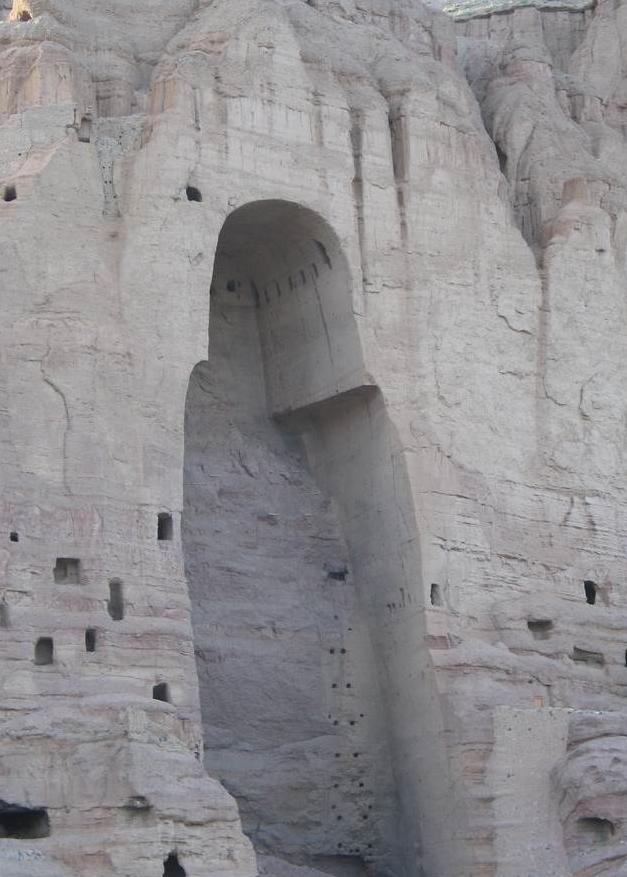
The cliff still stands. The two niches are still there, large and empty against the sandstone. The stabilization work done since 2003 has held. What has not held is any program of active maintenance or conservation. Since August 2021, that work has ceased.
Looting of Buddhist antiquities from the site has been documented by archaeologists monitoring from outside the country. Illegal construction and excavation near the niches have threatened the archaeological layers that remain. Social media accounts have documented incidents of RPG fire directed at the empty niches as recently as 2022. The pattern is consistent with the Taliban's record.
The targeting of Hazara symbols - physical monuments, historical figures, representations of Hazara history in public space - continued without interruption from the moment of the Taliban's return.
The Hazara community in Bamiyan continues to live there, in one of Afghanistan's poorest provinces, without reliable water, electricity, or basic services, under a government that has documented its willingness to kill them. For Hazaras outside Afghanistan - in Australia, Europe, North America, Iran, Pakistan - the valley and the empty niches carry the weight of all of that.
What Remains
There are two large empty niches in a sandstone cliff in central Afghanistan. They have been there for 25 years now. Long enough that children have grown up in Bamiyan who have never seen anything in them.
What fills those niches is not nothing. It is everything that was deliberately put there.
The Taliban did not destroy the Buddhas as an act of incidental iconoclasm. The decree came during a campaign of ethnic and cultural elimination directed at the Hazara people, in the Hazara homeland, targeting monuments that the Hazara community had called by its own names for generations. The destruction was meant to send a message. It was received as one.
But the names persist. Salsal and Shahmama appear in Hazara storytelling, poetry, film, and music - inside Afghanistan and wherever Hazaras have settled. The figures that once stood in those niches keep appearing in Hazara cultural production around the world, not as Buddhist religious icons but as markers of home, of loss, of the particular refusal to be erased that has characterized Hazara history across centuries of persecution.
The cave structures where Hazara families sheltered through winter and war still stand. The valley where Hazara people have lived for centuries is still there. The paintings in the caves - the oldest oil paintings ever made, now largely destroyed - documented that this place was a meeting point of civilizations at a moment when the world was being formed.
The empty niches document something else: what happens when the international community has no mechanism to stop deliberate, publicized destruction; when a minority people's cultural heritage is treated as a secondary concern in debates about their own monuments; when the world condemns something with full sincerity and no consequence.
They also document that the Buddhas stood for 1,400 years. That the Hazara named them and made them part of who they are. That the destruction, for all its completeness, did not accomplish what it was meant to accomplish.
The niches are empty. The names are not.
ترجمه فارسی
بتهای بامیان: چه از دست رفت و چه میماند
بتهای بامیان: چه از دست رفت و چه میماند
دو هزار سال تاریخ فرهنگی، در دو روز ویران شد.
در ۲ مارچ ۲۰۰۱، طالبان به یک صخرۀ ماسهسنگی در مرکز افغانستان توپ شلیک کردند.
صخره حدود ۱٬۵۰۰ متر طول و ۵۰ متر بلندی داشت. دو پیکر ایستادۀ بودا در آن تراشیده شده بود - بزرگترین در نوع خود در هر جای جهان. پیکر بلندتر ۵۵ متر بود. کوتاهتر، ۳۸ متر. آنها در یک شکل یا شکلی دیگر، حدود چهارده قرن در آنجا بودند.
توپ کافی نبود. پس از چند روز شلیک پیوسته، هر دو بت آسیب دیدند اما ویران نشدند. پس جنگجویان طالبان با ریسمان از روی صخره پایین آورده شدند. سوراخهایی در ماسهسنگ مته کردند. گزارش شده که کمک تخصصی خارجی در جای دادن مواد منفجره در درون پیکرها دخیل بوده. ماینهای ضدتانک در پای محرابها قرار داده شدند تا تکههای سنگ افتاده انفجارهای بیشتری را راه بیندازند. وقتی یکی از چهرهها از انفجارهای اولیه جان به در برد، یک راکت برای پایان کار شلیک شد.
تخریب کامل تقریباً ۲۵ روز طول کشید. تا پایان مارچ ۲۰۰۱، هر دو بت به آوار تبدیل شده بودند.
جهان همۀ آن را تماشا کرده بود. یونسکو ۳۶ نامه فرستاد. علمای دینی مسلمان از مصر، عراق و پاکستان فتواهایی محکومکنندۀ تخریب طرحریزیشده صادر کردند. مجمع عمومی سازمان ملل قطعنامهای را که توسط بیش از ۹۰ کشور حمایت میشد، برای توقف تخریب تصویب کرد. جاپان پیشنهاد داد بتها را با هوا از افغانستان بیرون ببرد و پیشنهاد پرداخت هزینۀ آن را داد. پاکستان - یکی از تنها سه کشوری که حکومت طالبان را بهطور رسمی به رسمیت میشناخت - مستقیماً درخواست کرد. هیچیک از اینها تفاوتی نکرد.
آنچه پوشش بینالمللی آن زمان اغلب از دست داد، و آنچه اکنون سابقۀ تاریخی باید روشن باشد: درۀ بامیان قلب هزارجات، سرزمین مردم هزاره است. مردمی که نسلها در سایۀ آن بتها زندگی کرده بودند، نامهایی برای آنها داشتند که با بودایی هیچ ارتباطی نداشت. و تخریب بتها یک رویداد جداگانه نبود - یک عمل در یک کارزار گستردهتر آزار و اذیت و حذف بود که علیه مردم هزاره صورت گرفت. این دو داستان یک داستاناند.
آنها چه بودند
درۀ بامیان دستکم از قرن دوم میلادی زیر امپراتوری کوشانی - سلسلهای که راه ابریشم را میان چین، هند و رم در دست داشت - یک سایت دینی بودایی بود. کوشانیها بر یک فرهنگ بهراستی همنشینانه نظارت داشتند، فرهنگی که در آن زیباییشناسی یونانی هلنیستی، سنتهای امپراتوری فارسی، اندیشۀ دینی هندی، و شکلهای آسیای میانه همه به هم میرسیدند و در هم میآمیختند. آن همآمیزی در هر چیزی که این دره تولید کرد، دیده میشود.
دو بت بزرگ بودا مستقیماً در صخره تراشیده شده بودند - بدنها از خود ماسهسنگ شکل گرفته بودند، چهرهها و دستها احتمالاً از گل آمیخته با کاه مدلسازی شده بودند، با گچ پوشانده و نقاشی شده بودند. سبک به آنچه پژوهشگران سنت گاندارایی مینامند تعلق دارد: موضوع بودایی که با تکنیک هلنیستی ارائه شده، جامهها در برجستگیِ ژرفِ روان تراشیده شدهاند که مجسمۀ یونانی و رومی را به یاد میآورد.
پیکر شرقی - ۳۸ متر بلندی، با کربنگذاری به حدود ۵۷۰ میلادی - در منابع اسلامی قرون وسطی بهعنوان «بت سفید» شناخته میشد. در نقطهای از تاریخ خود سفید نقاشی شده بود. پیکر غربی - ۵۵ متر بلندی، با کربنگذاری به حدود ۶۱۸ میلادی - «بت سرخ» بود. پژوهش بعدی تأیید کرد که هر دو بت در طول تاریخهای دراز خود چند بار نقاشی شده بودند: لایههای پیشین جامههای داخلی آبی تیره و بیرونی نارنجی روشن یا صورتی را نشان میدادند، پیش از مرحلۀ سرخ و سفید که توسط نویسندگان قرن یازدهم ثبت شد. تاریخ نقاشی خود سابقهای از قرنها نگهداری، اخلاص و استفاده است.
زائر بودایی چینی Xuanzang در ۳۰ اپریل ۶۳۰ میلادی از بامیان دیدن کرد. آن را شکوفا یافت: «بیش از ده صومعه و بیش از هزار راهب.» این دره یک ایستگاه بزرگ راه ابریشم بود، که زائران، تاجران و پژوهشگران از سراسر جهان شناختهشده از آن دیدن میکردند. بتها مقیاسبندی شده بودند تا از فاصله دیده شوند، طوری قرار داده شده بودند که یک جامعۀ دینی زنده را که شامل صدها اتاقک غاری - صومعهها، نمازخانهها، سلولهای مراقبه و حرمها - تراشیدهشده در همان صخره بود، لنگر بزنند.
این سایت تا فتوحات اسلامی حدود ۷۷۰ میلادی بودایی باقی ماند. پس از آن، پیکرهای بزرگ بیش از دوازده قرن در یک چشمانداز مسلمان ایستادند پیش از این که طالبان بیایند.
اهمیت آنان صرفاً این نبود که بزرگ بودند. آنان بزرگترین نمونههای بازماندۀ یک سنت خاص بودند - بودای ایستاده در سبک گاندارایی - و در تقاطع دستکم نیم دوجین تمدن متمایز ایستاده بودند. در سنگ و گچ، چگونگی بهراستی به هم رسیدن و دگرگون کردن فرهنگها را ثبت میکردند. آن نوع شواهد قابل بازسازی نیست.
صلصال و شهمامه
مردم هزاره بتهای بامیان را نساختند. این بتها قرنها پیش از ظهور هزاره بهعنوان یک گروه قومی-زبانی متمایز وجود داشتند. اما در طول نسلها، هزاره آنها را مال خود ساخت - به همان شکلی که جوامع همیشه چیزهای باستانی را از طریق داستانهایی که دربارۀ آنچه هر روز میبینند میگویند، مال خود میسازند.
در سنت هزاره، آن دو پیکر صلصال و شهمامه شدند: نه شمایل بودایی، بلکه قهرمانان یک داستان عاشقانۀ محلی - زوجی نافرجام که عشقشان به تراژدی پایان یافت، آنان را به سنگ بدل کرد و برای همیشه در صخرۀ بالای دره ثابت کرد. این خواندن نادرست تاریخ نیست. این چگونگی کار فرهنگهاست. هر جامعهای که به اندازۀ کافی دراز با یک بنا زندگی کند، سرانجام آن را به چیزی شخصی بدل میکند.
ولایت بامیان در مرکز هزارجات قرار دارد - منطقۀ کوهستانی مرکز افغانستان که قرنها سرزمین هزاره بوده است. در درون جهان هزاره، به همان شیوهای عمل میکند که جغرافیاهای خاص برای مردمان خاص عمل میکنند: نه فقط بهعنوان یک مکان، بلکه بهعنوان گواهی بر تعلق. ==هزارهها برآورد میشود ۹ تا ۲۰ درصد از جمعیت ملی افغانستان را تشکیل میدهند - هرچند ارقام دقیق محل مناقشه باقی میماند، چون هیچ سرشماری ملی قابل اعتمادی هرگز انجام نشده.== در درون هزارجات، آنان اکثریتاند. بامیان مرکز آنان است.
هزاره یک گروه قومی-زبانی است که هزارگی، گویشی از فارسی، صحبت میکنند و اسلام شیعی را عمل میکنند. این ترکیب - تمایز قومی و هویت دینی شیعی در کشوری که سنی پشتون بر آن غالب است - بیش از یک قرن آنان را هدف آزار و اذیت توسط ساختارهای حاکم در افغانستان قرار داده. آنان از سرزمینهایشان رانده شدهاند، در شمال کشتار شدهاند، از نظر اقتصادی کنار گذاشته شدهاند، و از نظر سیاسی به حاشیه رانده شدهاند. کشتار ۱۹۹۸ در شمال - که در آن Human Rights Watch دستکم ۲٬۰۰۰ غیرنظامی هزاره کشتهشده را ثبت کرد، با برآوردهای گستردهتر که بهطور قابل توجه بالاتر میرود - تنها سه سال پیش از تخریب بتها رخ داد. چندین سازمان حقوق بشر آن را بهعنوان پاکسازی قومی توصیف کردند.
برای مردم هزاره که با جنگ و اخراج در سراسر جهان پراکنده شدهاند - جوامع بزرگ اکنون در ایران، پاکستان، آسترالیا، اروپا و امریکای شمالی - بامیان و چهرههای صلصال و شهمامه به همان شیوهای عمل کردند که نشانههای خاص برای مردمان بیجاشده در هر کجا عمل میکنند: بهعنوان نماد جغرافیایی خانه، یک نقطۀ جهتیابی، گواهی بر این که یک جامعه در آنجا وجود داشت و یک تاریخ داشت. وقتی به شما، مکرر و خشن، گفته شده که تعلق ندارید، بنایی که برای تعلقتان میایستد، وزنی حمل میکند که هیچ بیرونی نمیتواند بهطور کامل حساب کند.
ساختارهای غار در صخره همچنین ارتباط عملی با زندگی هزاره داشتند: خانوادههای محلی از آنها برای پناه در طول زمستانهای وحشیانۀ افغانستان و در طول خشونتهای دورهای که دره را فرا میگرفت، استفاده میکردند. محرابها و گذرگاهها برای افرادی که در آنجا زندگی میکردند، قطعات موزه نبودند. بخشی از چشمانداز بقای روزانه بودند.
چه چیز دیگری در آنجا بود
بتها قابلدیدنیترین عنصر یک مجموعۀ بسیار بزرگتر بودند - و فقدان آن مجموعه دستکم به همان اندازۀ فقدان بتها اهمیت دارد.
صخره حاوی تقریباً ۵۰ غار نقاشیشده بود که با صحنههایی از زندگی بودا تزیین شده بودند. صدها غار مصنوعی اضافی در سراسر دره وجود داشت - صومعهها، نمازخانهها، فضاهای مراقبه. بقایای باستانشناختی از قرن سوم تا هشتم میلادی را شامل میشد. این سایت بهطور کلی، در عمل، یک شهر راه ابریشم بود: مکانی که تمدن بودایی در طول صدها سال در آن متمرکز شده و خود را بیان کرده بود.
در ۲۰۰۸، یک تیم پژوهشی از جاپان، فرانسه و ایالات متحده یافتههایی را منتشر کرد که آنچه را نقاشیهای غار نمایندگی میکردند بازچارچوببندی کرد. تحلیل نمونههای رنگ از ۱۲ غار نشان داد که محیط چسبنده روغن بود - بهطور خاص روغن گردو و دانۀ خاشخاش، آسیابشده با رنگدانههای معدنی. نقاشی پایه-روغنی. در قرنهای ششم و هفتم میلادی.
این پنج تا هفت قرن از نخستین استفادۀ شناختهشدۀ قبلی از رنگ روغن در اروپا پیش است. غارهای بامیان حاوی قدیمیترین نقاشیهای روغنی شناختهشده در جهان بودند.
نقاشیهای دیواری با کربنگذاری به میان ۴۳۸ و ۹۸۰ میلادی، با دورۀ اصلی تولید میان قرنهای ششم و هشتم برمیگردد. محتوای آنان همان همآمیزی را که در هر جای بامیان دیده میشد بازتاب میدهد: زیباییشناسی هندی گوپتا، شکلهای ایرانی ساسانی، عناصر سبکی بیزانسی، و سنت محلی تخارستان، همه به هم بافته شده در تصاویری از پیکرهای بودای نشسته در میان جامههای شنگرفی، برگهای خرما و موجودات اسطورهای.
تخریب طالبان، و دورۀ غارت و غفلتی که پی آمد، به فقدان بیش از ۸۰ درصد از نقاشیهای غار که تا زمان معاصر باقی مانده بودند، انجامید.
فرمان و تخریب
در ۲۶ فبروری ۲۰۰۱، رهبر عالی طالبان ملا محمد عمر یک فرمان رسمی صادر کرد: همۀ مجسمهها و حرمهای غیراسلامی در افغانستان باید تخریب شوند، «تا کسی نتواند در آینده آنها را بپرستد یا احترام کند.» این فرمان پس از مشورت با یک شورای علمای دینی که زیر اقتدار طالبان جمع شدند، آمد.
این، شایان توجه، یک واژگونی بود. در جولای ۱۹۹۹، عمر فرمانی صادر کرده بود که از بتهای بامیان حفاظت میکرد و طرحهایی برای یک مسیر گردشگری توصیف میکرد. آنچه میان ۱۹۹۹ و ۲۰۰۱ تغییر کرد، موضوعی از تحلیل تاریخی محل مناقشه است، اما زمانبندی شایان توجه است. این فرمان در دورهای از تشدید خشونت طالبان علیه هزاره و عمیقتر شدن انزوای بینالمللی پس از جنایات ثبتشدۀ طالبان آمد. تخریب بنایی که مردم هزاره با نام آن را میخواندند - صلصال، شهمامه - در یک جهان سیاسی جدا از کشتارها و اخراجهایی که در همان ولایت در حال گشایش بودند، رخ نمیداد.
در ۱ مارچ، طالبان بهطور عمومی اعلام کرد که همۀ مجسمههایی که انسانها را در افغانستان به تصویر میکشند، تخریب خواهند شد. کار صبح بعدی آغاز شد.
این روند نیازمند تلاش مهندسیای بود که طالبان در ابتدا انتظار نداشت. شلیک توپ آسیب شدیدی وارد کرد اما پیکرها را پایین نیاورد. ماینهای ضدتانک در پای محرابها قرار داده شدند. جنگجویان طالبان با ریسمان پایین آورده شدند تا در خود مجسمهها سوراخ مته کنند. مواد منفجره در داخل قرار داده شدند. وقتی یک چهره از انفجارها جان به در برد، یک راکت برای کامل کردن کار شلیک شد.
ملا عمر، نقلشده در ۶ مارچ، مستقیم بود: «مسلمانان باید به شکستن بتها افتخار کنند. حمد بر الله که ما آنها را نابود کردیم.»
پاسخ بینالمللی در محکومیت خود راستین بود و بهطور کامل بدون پیامد. این فصل یک شکاف اساسی در حقوق میراث فرهنگی بینالمللی را آشکار کرد: سازوکار اجرایی برای متوقف کردن تخریب فرهنگی عامدانه و عمومیشده در درون یک دولت حاکم وجود نداشت - حتی وقتی ۹۰ کشور بهطور رسمی از آن خواسته بودند متوقف شود.
بیست و پنج روز پس از آغاز تخریب، هر دو بت رفته بودند. جایی که صلصال و شهمامه ۱٬۴۰۰ سال ایستاده بودند، دو محراب بزرگ خالی در ماسهسنگ بود.
پس از: ثبت، تعیین و محدودیتهای توجه بینالمللی
یونسکو Cultural Landscape and Archaeological Remains of the Bamiyan Valley را در ۲۰۰۳ در فهرست میراث جهانی ثبت کرد. این ثبت سایت را زیر پنج معیار فرهنگی به رسمیت شناخت - بهعنوان شاهکار نبوغ خلاق انسان، یک تبادل مهم ارزشهای انسانی در سراسر فرهنگها، گواهی استثنایی بر یک سنت فرهنگی ناپدیدشده، نمونهای برجسته از یک مرحلۀ مهم در تاریخ انسانی، و سایتی بهطور مستقیم مرتبط با رویدادها و سنتهایی با اهمیت برجستۀ جهانی.
همزمان آن را در List of World Heritage in Danger نیز قرار داد.
ثبت ۲۰۰۳ اعلام رسمی جامعۀ بینالمللی بود مبنی بر این که بامیان اهمیت دارد - دو سال پس از تخریبی که این ثبت را ضروری ساخت.
از ۲۰۰۳، یونسکو و شرکای بینالمللی بیش از ۲۷ میلیون دلار در کار در این سایت سرمایهگذاری کردهاند. عملیات پیچیدۀ پاکسازی ماین مواد منفجره و ماینهای زمینی را از آوار پاک کرد. تیمها تقریباً ۴۰۰ تن قطعه را غربال کردند، و قطعات بتها را ثبت و فهرست کردند. صخره و دو محراب تثبیت شدند. نقاشیهای غار بازمانده ارزیابی و حفظ شدند. اسکن لیزری و ثبت دیجیتال سوابقی برای ارجاع احتمالی آینده ایجاد کرد.
پس از اگست ۲۰۲۱، وقتی طالبان کنترل افغانستان را پس گرفت، آن کار متوقف شد.
بحث بازسازی
پرسش این که با محرابهای خالی چه باید کرد، از زمانی که آوار آرام گرفت، محل مناقشه بوده و حلنشده باقی میماند.
استدلالها برای بازسازی کامل واقعی هستند. بتها یک نشانۀ هویت و سرزمین هزاره بودند. بامیان یکی از فقیرترین ولایات افغانستان است، و درآمد گردشگری - هر محدودیت عملی که زیر هر حکومت طالبان داشته باشد - بهعنوان یک استدلال اقتصادی ذکر شده. یک بعد سیاسی هست: بازسازی آنچه طالبان ویران کرد، یک بیانیه خواهد بود. و یک استدلال تداوم فرهنگی هست: بازگرداندن پیکرها به جامعهای که آنان را صلصال و شهمامه میخواند.
استدلالها در برابر بازسازی نیز واقعیاند. منشور ونیز ۱۹۶۴ - سند بنیادی عمل حفاظت میراث بینالمللی - تنها anastylosis را اجازه میدهد: بازسازی مواد اصلی. نه بازسازی با مواد نو. یونسکو بهصراحت گفته که بازسازی بتها با مواد غیراصلی، وضعیت میراث جهانی این سایت را در معرض خطر قرار خواهد داد. فراتر از محدودیتهای تکنیکی، یک محدودیت فلسفی هست: محرابهای خالی اکنون خود یک سند تاریخی هستند. ثبت میکنند چه شد. پر کردن آنها آن سابقه را پاک میکند.
محدودیتهای عملی در هر صورت شدید هستند. مواد اصلی کافی برای بازسازی پیکرها زیر استانداردهای anastylosis باقی نمانده. برآوردهای هزینه برای هر بازسازی جدی به صدها میلیون دلار میرسد - پولی که افغانستان ندارد، و پولی که هیچ نهاد بینالمللی متعهد نشده.
در ۲۰۱۵، در طول جشنوارۀ سالانه راه ابریشم بامیان، فیلمسازان چینی Zhang Xinyu و Liang Hong هلوگرامهای ۳بعدی بتها را در شب در محرابهایشان پروجکت کردند. این پروجکشنها ساعتها طول کشید. روایتهای همان زمان پاسخ در میان ساکنان بامیان - بسیاری از آنان که با بتها بزرگ شده بودند - را بهعنوان عمیقاً عاطفی توصیف میکنند. چهارده سال غیبت آنچه را آن شبحها معنی میکردند کم نکرده بود.
اما بسیاری از صداهای هزاره، وقتی دربارۀ هلوگرامها پرسیده شدند، گفتند که میخواهند خود بتهای واقعی برگردند - نه یک نمایش نور. حضوری که نمیتوان لمس کرد، که فقط در نور پروجکتشده وجود دارد و در سپیدهدم ناپدید میشود، پرسشهای ناراحتکنندهای دربارۀ این که چه نوع بازسازی بهراستی چیزی را بازمیگرداند، مطرح میکند.
در ۲۰۱۳، یک تیم حفاظت آلمانی آغاز به بازچیدن پاهای بت شرقی با استفاده از anastylosis کرد - قطعات اصلی به جای خود بازگردانده شدند. از آنان خواسته شد متوقف شوند. نگرانی این بود که این کار استانداردهای اصالت لازم برای حفظ وضعیت میراث جهانی را برآورده نمیکند. این فصل شکاف میان آرزو برای انجام کاری و چارچوبی که چگونگی انجام آن را اداره میکند را تصویر میکند.
یک موضع که حمایت برخی را در میان آنانی که با دقت به این فکر کردهاند به دست آورده، این است که یک پیکر را بازسازی کنیم و محراب دیگر را خالی بگذاریم. استدلال در هر دو جهت یکجا میرود: بازسازی یکی یک عمل بازپسگیری فرهنگی، یک رد از این که اجازه دهیم تخریب آخرین حرف باشد. خالی گذاشتن دیگر، سابقۀ تاریخی آنچه شد را حفظ خواهد کرد. این چارچوببندی فضیلت گرفتن جدی هم آنچه از دست رفت و هم آنچه فقدان معنی میدهد را دارد.
آنچه در سرتاسر این بحث پیوسته بوده، و آنچه شایستۀ نام بردن مستقیم است: تصمیمها دربارۀ آیندۀ بتها در درجۀ اول توسط نهادهای حفاظت بینالمللی، یونسکو، حکومتهای خارجی، و مقامات ملی افغانستان گرفته شده. جامعۀ هزاره - افرادی که در دره زندگی میکنند، که نیاکانشان بتها را صلصال و شهمامه میخواندند، که برای آنان پرسش بازسازی یک بحث دانشگاهی نیست بلکه پرسشی دربارۀ خودِ تاریخشان است - حاشیهای بر یک گفتوگو بوده که اساساً دربارۀ آنان است.
سایت امروز
حکومت طالبانی که در اگست ۲۰۲۱ به قدرت بازگشت، با ناسازگاری مشخصۀ خود، همزمان گردشگری به بامیان را ترویج کرده و آزار و اذیت سیستماتیک خود علیه مردم هزاره را ادامه داده. این تناقض ظاهراً برای آنان دشوار به نگه داشتن نیست.
صخره هنوز ایستاده است. دو محراب هنوز در آنجا هستند، بزرگ و خالی در برابر ماسهسنگ. کار تثبیتی که از ۲۰۰۳ انجام شده، دوام آورده. آنچه دوام نیاورده، هیچ برنامۀ نگهداری یا حفاظت فعالی است. از اگست ۲۰۲۱، آن کار متوقف شده.
غارت عتیقههای بودایی از این سایت توسط باستانشناسانی که از بیرون کشور نظارت میکنند، ثبت شده. ساختوساز غیرقانونی و حفاری نزدیک محرابها لایههای باستانشناختی باقیمانده را تهدید کرده. حسابهای رسانههای اجتماعی حوادث شلیک RPG به محرابهای خالی را تا همین اواخر ۲۰۲۲ ثبت کردهاند. این الگو با سابقۀ طالبان همخوان است.
هدفگیری نمادهای هزاره - بناهای فیزیکی، چهرههای تاریخی، نمایشهای تاریخ هزاره در فضای عمومی - از لحظۀ بازگشت طالبان بدون وقفه ادامه یافت.
جامعۀ هزاره در بامیان همچنان در آنجا زندگی میکند، در یکی از فقیرترین ولایات افغانستان، بدون آب، برق، یا خدمات اولیۀ قابل اعتماد، زیر حکومتی که آمادگی خود را برای کشتن آنان ثبت کرده. برای هزارههای خارج از افغانستان - در آسترالیا، اروپا، امریکای شمالی، ایران، پاکستان - دره و محرابهای خالی، وزن همۀ آن را حمل میکنند.
آنچه میماند
دو محراب بزرگ خالی در یک صخرۀ ماسهسنگی در مرکز افغانستان هستند. اکنون ۲۵ سال است که در آنجا بودهاند. به اندازۀ کافی دراز که کودکانی در بامیان بزرگ شدهاند که هرگز چیزی در آنها ندیدهاند.
آنچه آن محرابها را پر میکند، هیچ نیست. این هر چیزی است که عامدانه در آنجا قرار داده شد.
طالبان بتها را بهعنوان یک عمل بتشکنی تصادفی تخریب نکرد. این فرمان در طول کارزاری از حذف قومی و فرهنگی که علیه مردم هزاره، در سرزمین هزاره، و با هدفگیری بناهایی که جامعۀ هزاره نسلها با نامهای خود میخواند، آمد. تخریب قرار بود پیامی بفرستد. بهعنوان یک پیام دریافت شد.
اما نامها تداوم دارند. صلصال و شهمامه در داستانسرایی، شعر، فیلم و موسیقی هزاره ظاهر میشوند - در درون افغانستان و هر کجا که هزارهها ساکن شدهاند. پیکرهایی که زمانی در آن محرابها ایستادند، در تولید فرهنگی هزاره در سراسر جهان همچنان ظاهر میشوند، نه بهعنوان شمایل دینی بودایی بلکه بهعنوان نشانههای خانه، فقدان، آن رد ویژۀ پاکنشدن که در طول قرنهای آزار و اذیت تاریخ هزاره را مشخص کرده.
ساختارهای غاری که خانوادههای هزاره از طریق آنها از زمستان و جنگ پناه گرفتند هنوز ایستادهاند. درهای که مردم هزاره قرنها در آن زندگی کردهاند، هنوز در آنجاست. نقاشیهای غار - قدیمیترین نقاشیهای روغنی که تاکنون ساخته شده، که اکنون عمدتاً ویران شدهاند - ثبت کردند که این مکان یک نقطۀ ملاقات تمدنها در لحظهای بود که جهان در حال شکل گرفتن بود.
محرابهای خالی چیز دیگری ثبت میکنند: آنچه رخ میدهد وقتی جامعۀ بینالمللی سازوکاری برای متوقف کردن تخریب عامدانه و عمومیشده ندارد؛ وقتی میراث فرهنگی یک ملت اقلیت بهعنوان نگرانی ثانوی در بحثهایی دربارۀ بناهای خودشان درنظر گرفته میشود؛ وقتی جهان چیزی را با صداقت کامل و بدون پیامد محکوم میکند.
آنها همچنین ثبت میکنند که بتها ۱٬۴۰۰ سال ایستادند. که هزاره آنها را نام نهاد و آنان را بخشی از این که چه هستند ساخت. که تخریب، با وجود کامل بودن آن، آنچه قرار بود به دست آورد را به دست نیاورد.
محرابها خالیاند. نامها نه.